
17: Cold Metal / Tycoon
On Clemente Castor's Cold Metal (2025) and Charlotte Zhang's Tycoon (2026), and on fiction as non-fiction and the cinema of the real
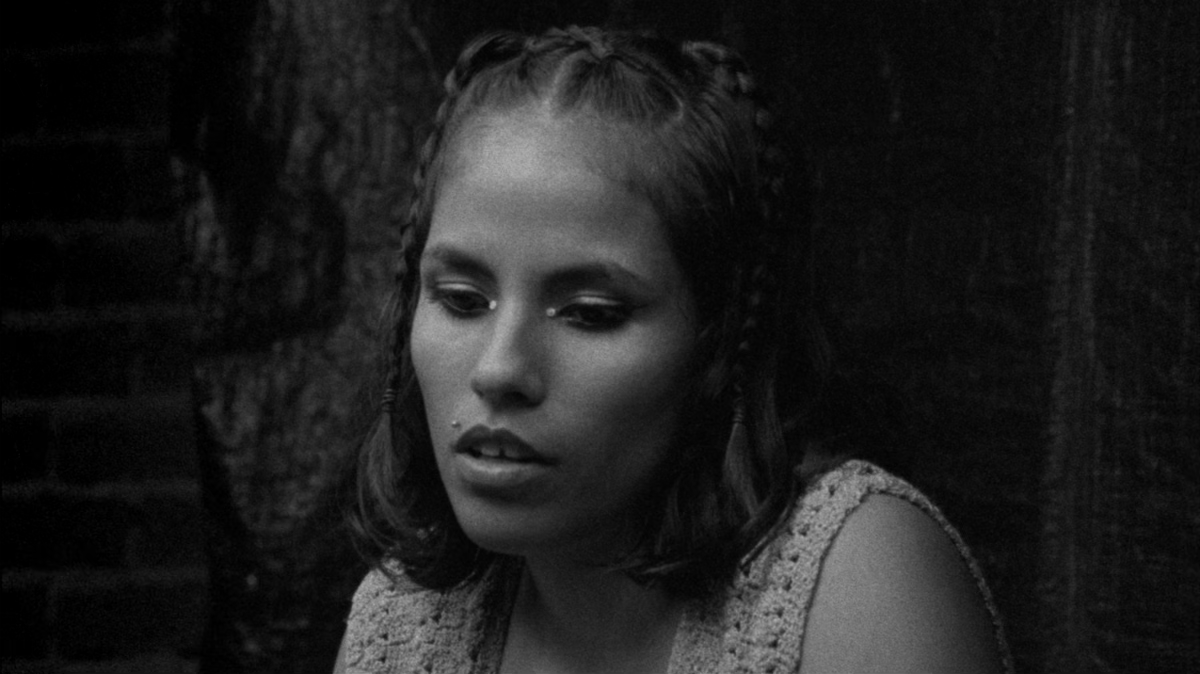
“Light my way so I don’t get lost”
What is a non-fiction film, exactly? The more you try to identify what fiction is, and what non-fiction is, and draw any kind of straight, divisive line between the two, the more evident it becomes that it is a very wobbly line that you are drawing. This is not a novel observation. To take just one example to substantiate this, FID Marseille, which programmes both narrative and documentary films, was at one point known as the Marseille Festival of Documentary Film. In 2011, the festival decided that this name no longer described what it was that they were showing and that “cinema” seemed to be the only suitably all-encompassing term. The use of the word “documentary” has long been questioned, but the more expansive and less misleading umbrella term “non-fiction” may still offer some value as a descriptor, if not for the purposes of strict categorisation but instead as: a suggestion of a sensibility; an indicator in an interest (in realism, and in humanity); or just for the assembling of a community. If it often fails to describe a classification—that by being “non-fiction” a film is somehow not fiction—it does communicate something to a certain type of spectator. People interested in non-fiction films are often the same people that go to museums and find themselves not looking at the paintings but instead looking at the faces of other people looking at the paintings. Viewers interested in non-fiction are generally looking to see the world reflected back at them, or refracted in a new way. They come with curiosity and attention, and a filmmaker builds them an environment to inhabit for a period of time that represents a reality, using whichever approach (participation, observation, fabrication, etc.) seems most suitable for doing so.
When thinking like this, the boundaries of what is “non-fiction” can stretch quite far and the describing line being so wobbly feels fine—all sorts of films, even those that are quite overtly fictional, can start to feel like a kind of non-fiction. What this may be describing could be something like “cinematic realism,” a world away from the excess of mainstream film and the pomposity of the arthouse in which viewers can see something that takes a lived reality as its basis, however elevated, altered, or fictionalised the eventual treatment may be. And within this bracket of encounter, you often see fiction films that have a kind of non-fiction sensibility, constructed realities that contain within them valuable truths: the sorts of works that might have been referred to as “ethnographic fictions” or as “the cinema of the real” at different points depending on who was trying to market or categorise them. One such recent film is Clemente Castor’s Cold Metal (2025), a slippery, genuinely enigmatic work that seems to defy not just categorisation but description too, transforming as it does from image to image and from scene to scene. It begins with an opening sequence that, despite surface-level banality, transfixingly establishes the hypnotic mood of the film that follows it. Shot with an aggressively grainy black-and-white 8mm stock, the scene focuses on a woman running a fairground-style roulette wheel game. The camera floats around the street corner she operates on gracefully, tracing laps in close-up from her face to those of the patrons gathered around her, to the peso bills that are stacked up around the wheel and the artwork seen on the machine. “It’s the arrow that marks and decides the prize,” she says in subtitles that are lent a poetic quality by how literally they have been translated, repeating and adjusting calls to punters that sound more like religious mantras than gambling sales-speak. “It’s marking, it’s deciding…” she says. “…It’s the arrow that marks.” Continuing on like this for several entrancingly languid minutes, the camera glides continuously around this microcosmic world that seems almost to be being conjured into existence through speech and gesture by this magician of rules, invocations, and rotations of the arrow. And even though the scene doesn’t establish much more than a mood, it’s enrapturing, the kind of sequence that transmits one of two things: either that its orchestrator is a filmmaker in command of something, or, perhaps more powerfully, that his film is in control of him, expressing through oblique sounds and images things that somehow needed to be said.
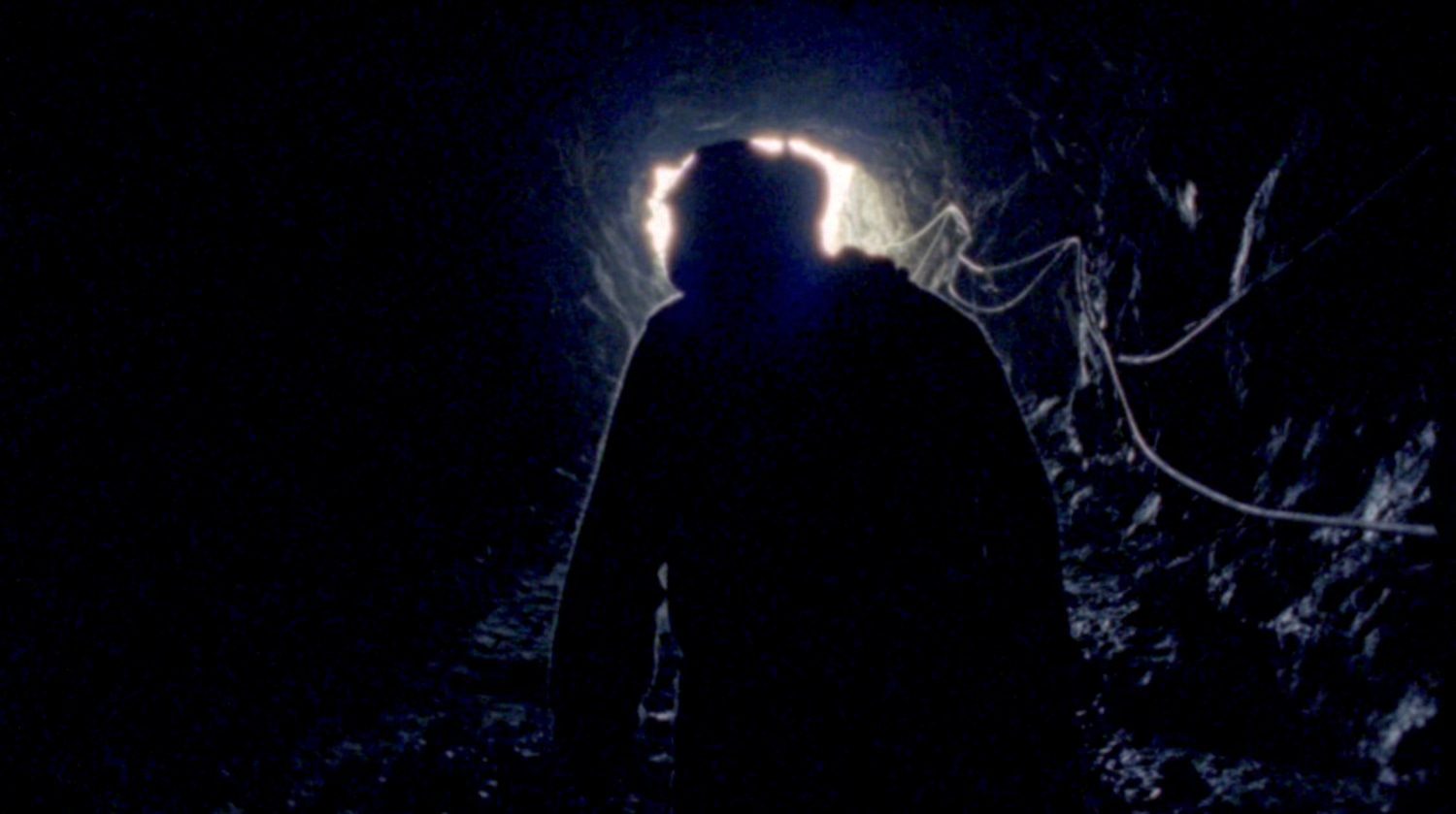
For the next scene the camera switches to dreamy 16mm colour, and while as viewers we still have little sense of what this film’s plot, setting, or genre might be, we do have a slowly crystallising sense of its atmosphere, a resonant type of abstract communication that Castor—a Mexican filmmaker who has been making films of a similar opacity since 2016, having studied at Béla Tarr’s Sarajevo film school—prefers. A ghostlike man, shirtless, slim, and pale, stands up slowly and stretches out his limbs like a bear coming out of a long hibernation. “Mario didn’t come back for some time,” says a woman in the scene after this one, talking aloud over a game of backgammon. Describing the disappearance of the film’s main character (Mario Banderas)—now back, same in bodily form but altered in spirit, channelling thoughts and feelings not his own—she establishes through cryptic dialogue what is to be the ostensible plot of Cold Metal: men from Iztapalapa, Mexico, who disappear and return, drifting back to the film’s various locations like ghosts of the landscape made fleshy-ish. The reason for these disappearances is not always clear. There’s mention of violence, of rehabilitation, and of isolation and purposelessness, but the transposition of the narrative to real-world parallels is never heavy-handed. Instead, Iztapalapa’s ghost-men return, not as fully present participants but instead as taciturn, nebulously spectral “slow cinema”-esque walker presences, striding forlornly through cavernous tunnels, tracing figures with their hands to make motions somewhere between martial arts, tai chi, and shadow puppetry, and carving shapes out of beautifully imposing stone boulders. Abstract narrations softly describe reunions with their partners, tender acts of love, and challenges of distance and doubling. “I never understood how two people could fit inside one body” becomes a pointed refrain.
The film’s furtive mood of wounded presences feeling distant pain transplants easily onto real national suffering. As Nicolas Pedrero-Setzer writes, “it’s impossible not to attach a political subtext onto Cold Metal; after all, it is set within the boundaries of a nation that has been dealing with the disappearance of hundreds of thousands due to drug-related violence, the furtive extraction of resources from both national and international agents, and unregulated labor practices.” But while this surface layer is fairly clear, Cold Metal is still a film that defies decoding, supplanting the dreamlike, ever-transmuting qualities of Castor’s gorgeous visuals into elements of the narrative, making for a journey film in which the central walker character steps pensively through an empire of signs. In addition to the aforementioned shadow puppet secret handshakes and the roulette wheel that decides fates, this is a film that is awash with games, codes, and symbols that seem to unlock not just new ideas but whole new dimensions for the characters that abstrusely engage in or with them. In one scene, Mario receives a tarot reading that casts a logic onto events in his life, seemingly showing a lost man trying to find not just an explanation of his past but a trajectory for his future. In another, groups of men gather at a meeting for alcoholics to discuss their individual struggles and collectively imagine how they might move forward.
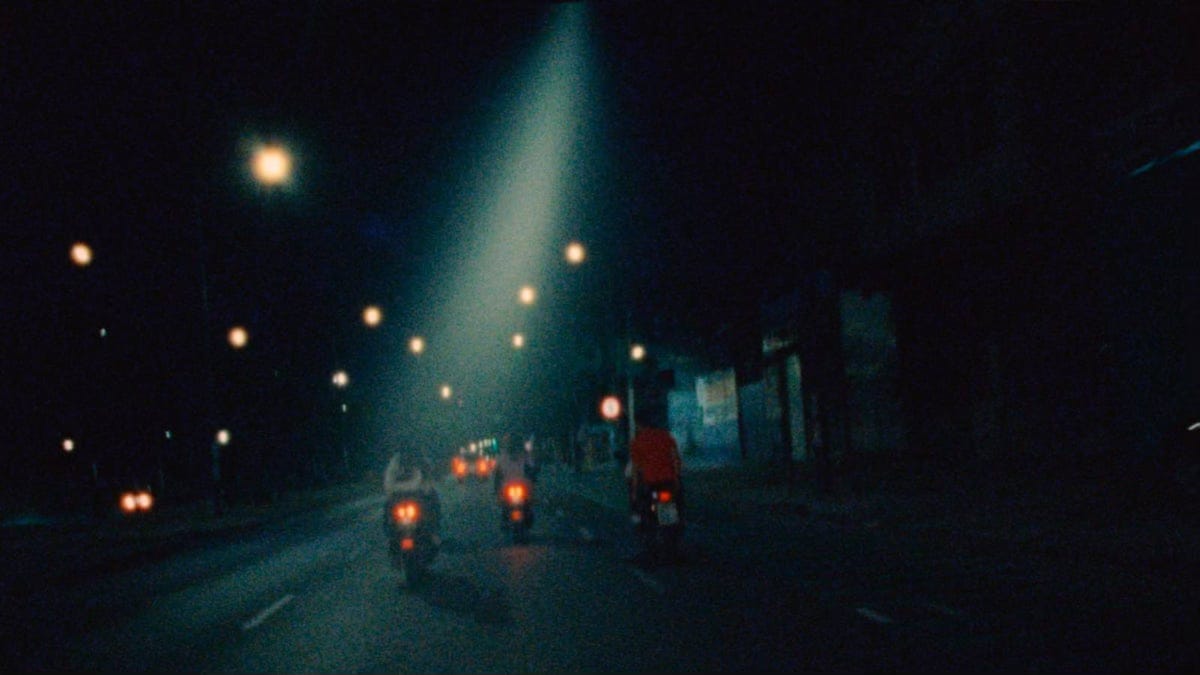
Men descend mutely into caves, march in lines over mountains, ride motorcycles, or lie statuesque on the floors of empty rooms. And while collectively it conjures a transcendent atmosphere, what is most striking about Cold Metal is how what is actually being seen is ordinary and grounded, a documentary depiction of a specific milieu and location that is elevated to seem totally ethereal and otherworldly through the film’s aesthetic alone. There’s no magic here other than the magic of the everyday: a strange spinning wheel, two hands tracing shapes to make messages, a torchlit cave, a formidable mountain. Edited elliptically, between the ostensible narrative comes various footage of street scenes that counterbalance the film’s sombre tone with some jubilance. We see club scenes, street music festivals, and church ceremonies, mundane realities that blend perfectly with the more ethereal-feeling images: the ghosts in the grain, the figures in the darkness, the voices in the distance. Overall, while Cold Metal captures a kind of slow-cinematic sleepwalking that will be familiar to fans of the languorously sensual, cryptically commanding sensibility of Apichatpong Weerasethakul, the film is more grounded in reality than this comparison suggests. This is not a non-fiction film, and yet, it absolutely is. Its fictions communicate something both about the literal surroundings being depicted and also about the wider world of contemporary Mexico they obliquely reflect, wherein violence, disappearance, and other terrain-shifting destabilisations are so commonplace they seem almost like an atmospheric presence. It is a kind of a fiction that feels fully real.
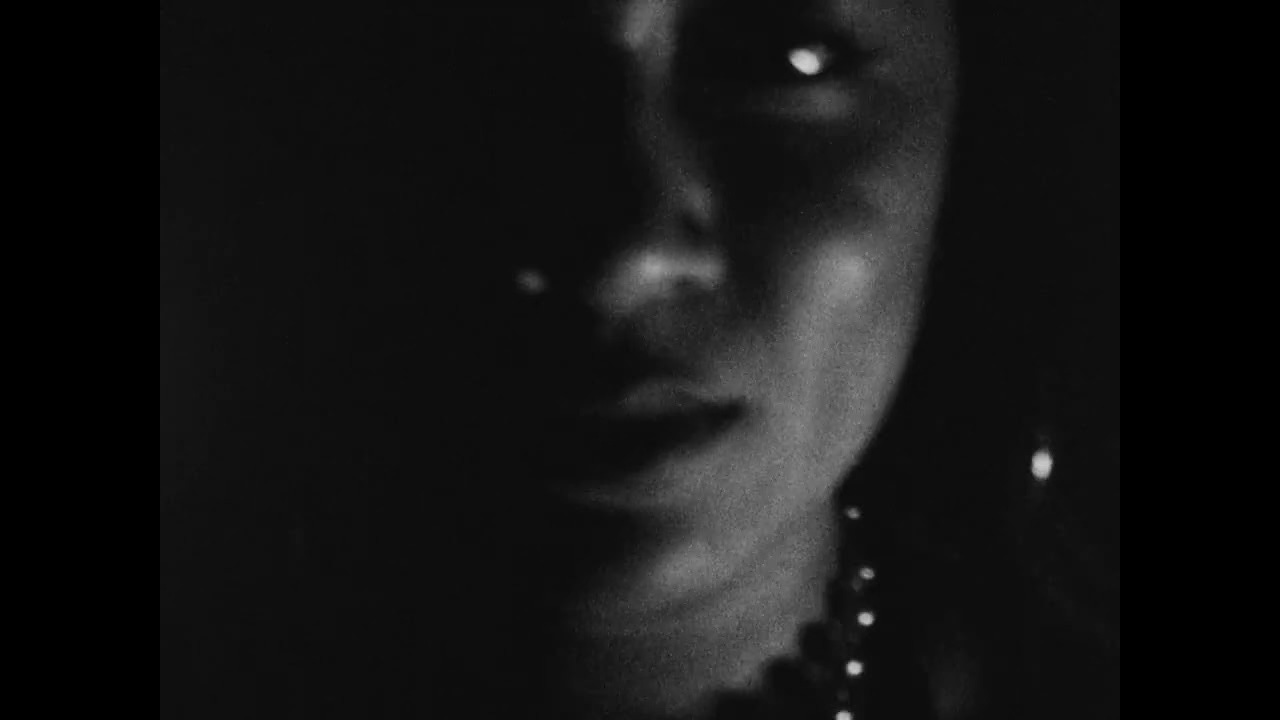
As a work of speculative fiction set in a near future Los Angeles, Charlotte Zhang’s Tycoon (2026) is, much like Cold Metal, resolutely not a non-fiction film, but it too feels like one. It has as its basis a concrete narrative, but this sometimes feels more like a shell than a story: a means of establishing the construction of a fictionalised setting in which a depiction of a lived reality can play out and through which various historical and political ideas can be explored. In the film, an unstable, recognisably dystopian Los Angeles is about to host the 2028 Olympics—an event that, whether due to the 2025 wildfires, the city’s unending ICE raids, or ongoing corruption scandals, neither the real or filmic city are ready for. Furthermore, in Tycoon’s Los Angeles, an outbreak of a livestock disease has triggered a ban on meat consumption, meaning that a cockroach-based powdered mixture—the distribution of which is controlled by a single mega-corporation called Ootheca—has become the city’s main foodstuff. Delivered mostly through voiceover that is mixed roughly enough to be nearly audible, this is the background. But in the foreground is the day-to-day survival story of the film’s protagonists, two young disenfranchised Latino Angelenos (Lito, Miguel Padilla-Juarez, and Jay, Jon Lawrence Reyes), trying to work out their place in this fractured city, enacting agency through various liberatory petty criminal acts, testing the limits of a senseless world. In one scene, they joyride around in an extraordinary montage set to Dinah Washington’s “This Bitter Earth,” having breached the door lock mechanism of a 4x4 using some kind of balloon pump method. In another, they break into an Ootheca truck and steal fruitful box-loads of the precious cockroach powder product, live-streaming the whole raid on Instagram. In between, they hang out, smoke vapes and cigarettes, mess with cars, cut each other’s hair, and shoot the shit.
Zhang layers this depiction of their lives within a brilliantly constructed maelstrom of visual and aural detritus, a bricolage-style montage that beautifully combines disparate material, both original and archival, into a flow that feels rhythmic and calculated while still maintaining a frenetic energy of something less planned, creating a world out of barraging images, sounds, patterns, and textures. A Canadian artist who first came to Los Angeles to study at Cal Arts, Zhang has made work in many mediums, creating sculptures, zines, collages, video installations, and films. This all seems to feed into the film’s distinctive aesthetic, in which iPhone, MiniDV, and Super 8 all wonderfully blend and collide in splendidly edited montage sequences, and in which photographs and handwritten, mantra-like xeroxed messages pop up in between almost like intertitles or cue-cards, providing abstruse context in the form of polemical single-line poems that read somewhere between lyrics and slogans. And the sound too is layered as collage. Voice sometimes becomes more like texture than dialogue, and music, specifically 1950s/60s rhythm-and-blues and doo-wop, provides a source of continual momentum, giving a kind of operatic quality to the film’s editing. Zhang studied classical piano, a process that she has said has informed the rhythmic montage that gives the film its particular fuzzy snap. “I’m wondering how a leitmotif moves between hands, between keys, and what it means to have a theme and variations, and what happens when a theme returns further in the song, in a different context, and what has been changed as a result of what has occurred beforehand,” she says. “Oh, this is a passage I have to play staccato! How do I translate that to film?”
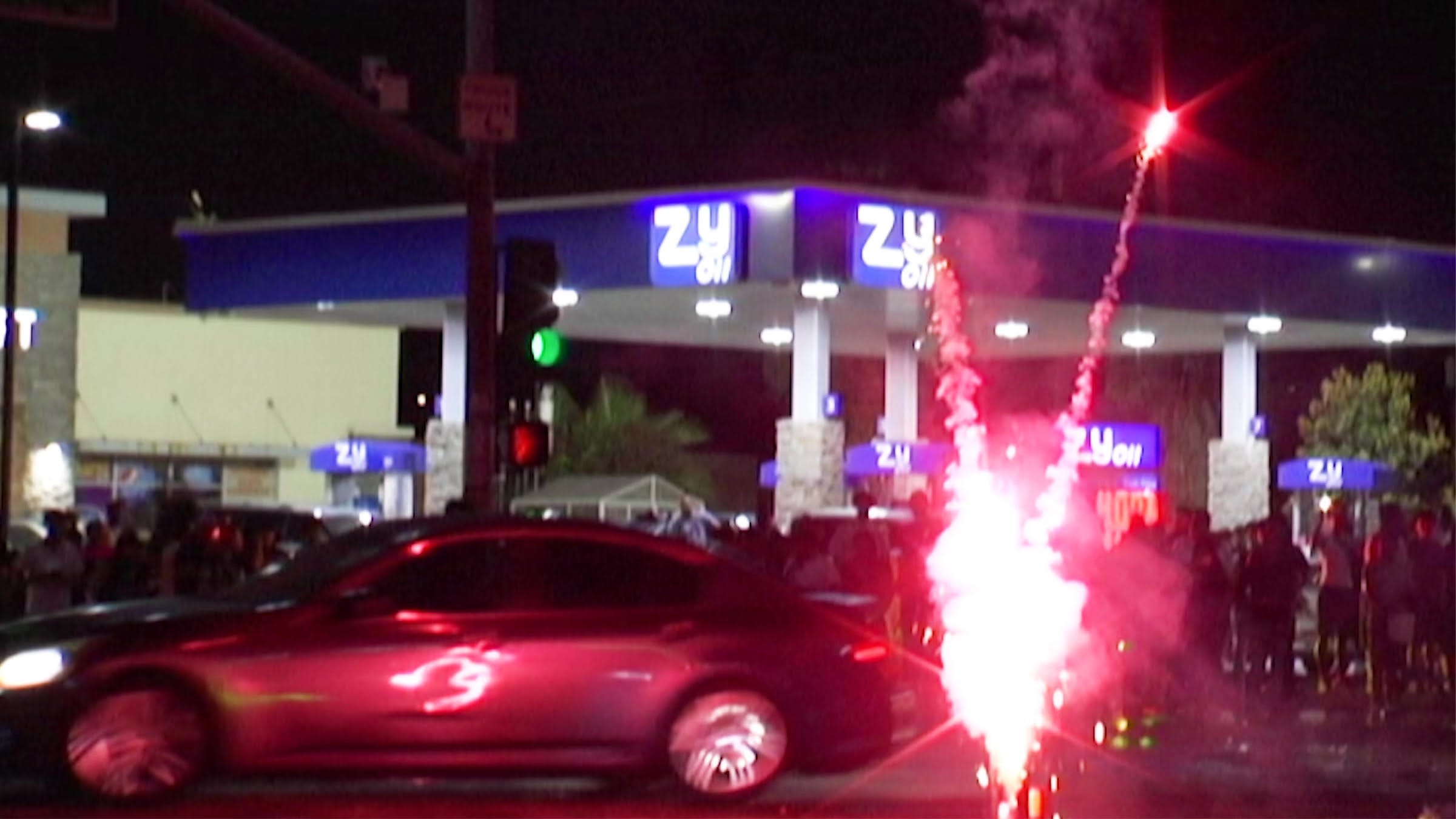
There is a lot going on in the background of Tycoon—Zhang has spoken, for example, about the film’s sensorial qualities being an attempt to bring together layers of the real life experience of how Los Angeles’ hosting of the 1984 Olympics led to tensions resulting in the 1992 uprisings in the city—but it is the ordinary idle moments that register most easily and emotionally. These more banal scenes—the stuff of everyday life—are what provides it with its documentary feeling, making a large part of this multivalent film a container for the sorts of material often found in what is sometimes referred to as a “hangout doc,” a film genre in which real, or at least real-seeming, people, are captured in scenes (either observed or orchestrated, generally shot on a handheld camera) seen simply living their lives. As a result, despite Tycoon’s grave subtexts and pervasively dark atmosphere, the vibe of it is of a film that feels like it has been made with friends having fun, a generative seeming production context that interviews with the director verify. All of the actors are non-actors. The locations are workplaces of the crew or came from tipoffs from friends. And resultantly the film’s world feels real, such that even when it departs from reality towards the fictitious the film has a lived reality to turn back to, providing a continual sensation of zigzagging: between the (plausibly) speculative and the (presumably) real, between levity and gravity, solemnity and humour, tension and release. One subject matter that the film frequently returns to is the Los Angeles “sideshow” or “takeover,” wherein groups of young people, mostly from minority groups, gather in streets or parking lots to drift cars and socialise. Zhang films these sequences, which perforate the film as extended observational sequences landing between story beats, with a gaze that suggests a reverent affinity, romanticising this public spectacle through long, balletically filmed long takes of cool modded cars spinning while water hydrant jets spray like fireworks as teens dodge cars drifting doughnuts in wide, floaty circles. In many ways, Tycoon feels like the perfect encapsulation of the wobbly line of the non-fiction-to-fiction non-divide, that horseshoe meeting of falsification and representation that Zhang hahs described as a “ zone of tension.” (In the same interview, Zhang expands on this: “I think it’s easy for films by and about people of color, especially young people of color, to be considered portrayals of this constant, authentic anthropological subject. You’re always presenting some sort of vaunted authenticity, and I think that can be really reductive, and denies people the agency, the right to fiction, the right to invent.”) But in these sideshow scenes, such tensions seem to subside, and in what is otherwise quite a dense film, thick with layers of image, reference, and research, this material just feels pleasingly straightforward. Life, recorded and beautified. Regular people, well captured, such that the totally ordinary comes to seem entirely sublime.
Cold Metal (Clemente Castor, 2025) had its premiere at FID Marseille, and has played at many other festivals since. More information about Clemente Castor can be found here. Tycoon (Charlotte Zhang, 2026) had its premiere at International Film Festival Rotterdam and has played at many other festivals since. More information about Charlotte Zhang can be found here. To receive more articles like this, please subscribe. The writing in this newsletter will always be free-to-read, but donations are very welcome.